Mental health challenges, substance use disorder and homelessness are often deeply connected – and deeply misunderstood. Stigma, past trauma, and broken trust can make seeking care feel impossible, leaving many without the support they need.
At Fourth Street Clinic, we believe care begins with meeting people where they are at, building trust and providing compassionate behavioral health care and substance use disorder support that treats the whole person, not just their addiction.
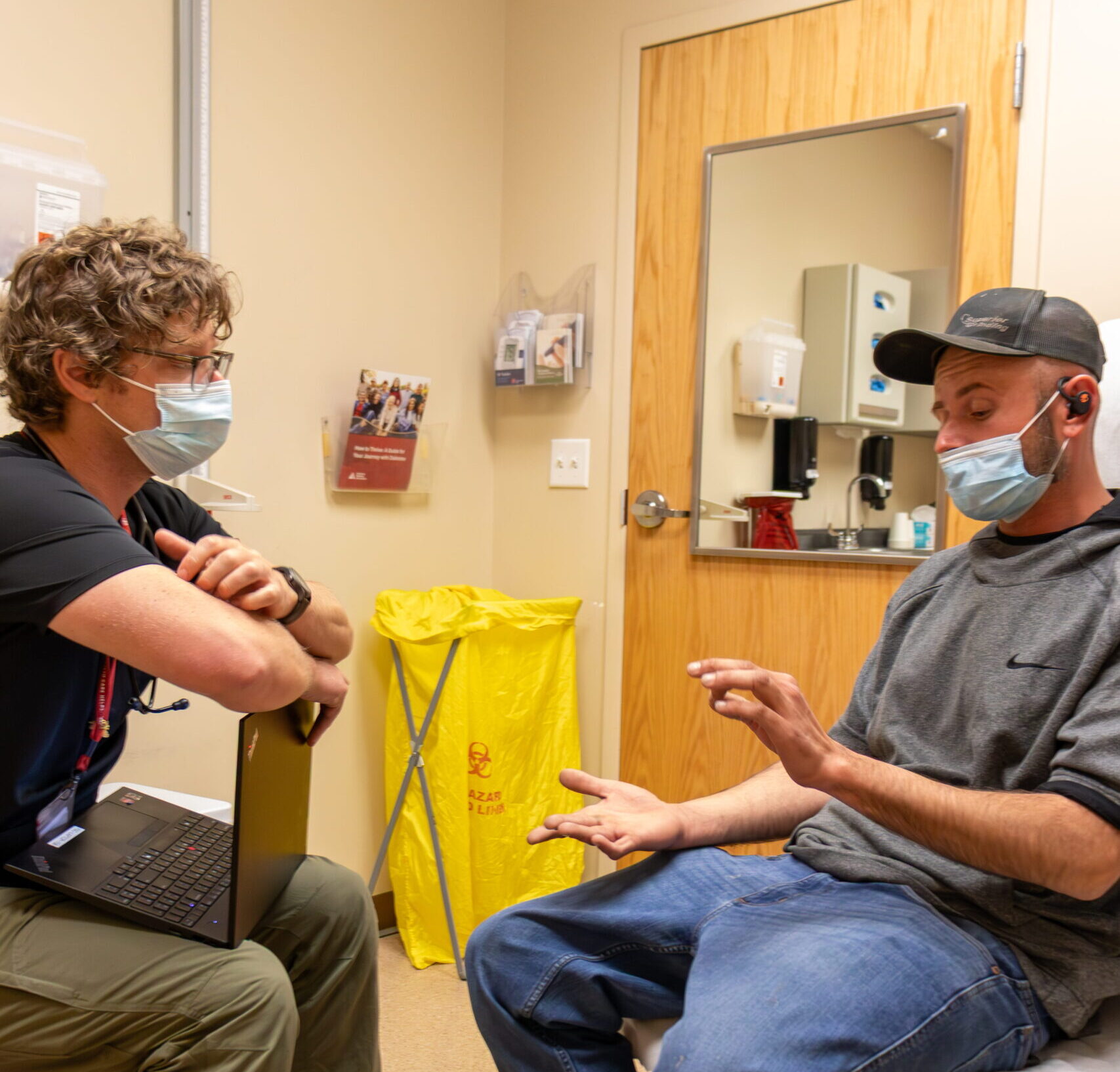
At just 21, Atreyo began experiencing homelessness, cycling in and out of the prison system while battling substance use disorder for over a decade. Exhausted and ready for change, he came to Fourth Street Clinic in 2023 seeking sobriety and care. Week after week, he rode the FrontRunner from a halfway house in Ogden, determined to show up for himself.
Through behavioral health support and medication-assisted treatment, Atreyo began to rebuild. Now 34, he recently entered his third year of sobriety and has steady work, as well as a stable place to call home. He continues to meet regularly with his provider at Fourth Street Clinic, maintaining his commitment to recovery.
“You guys saved my life,” he says. “You do awesome work here and help a lot of people.”
Alabama’s story is different, but no less shaped by determination.
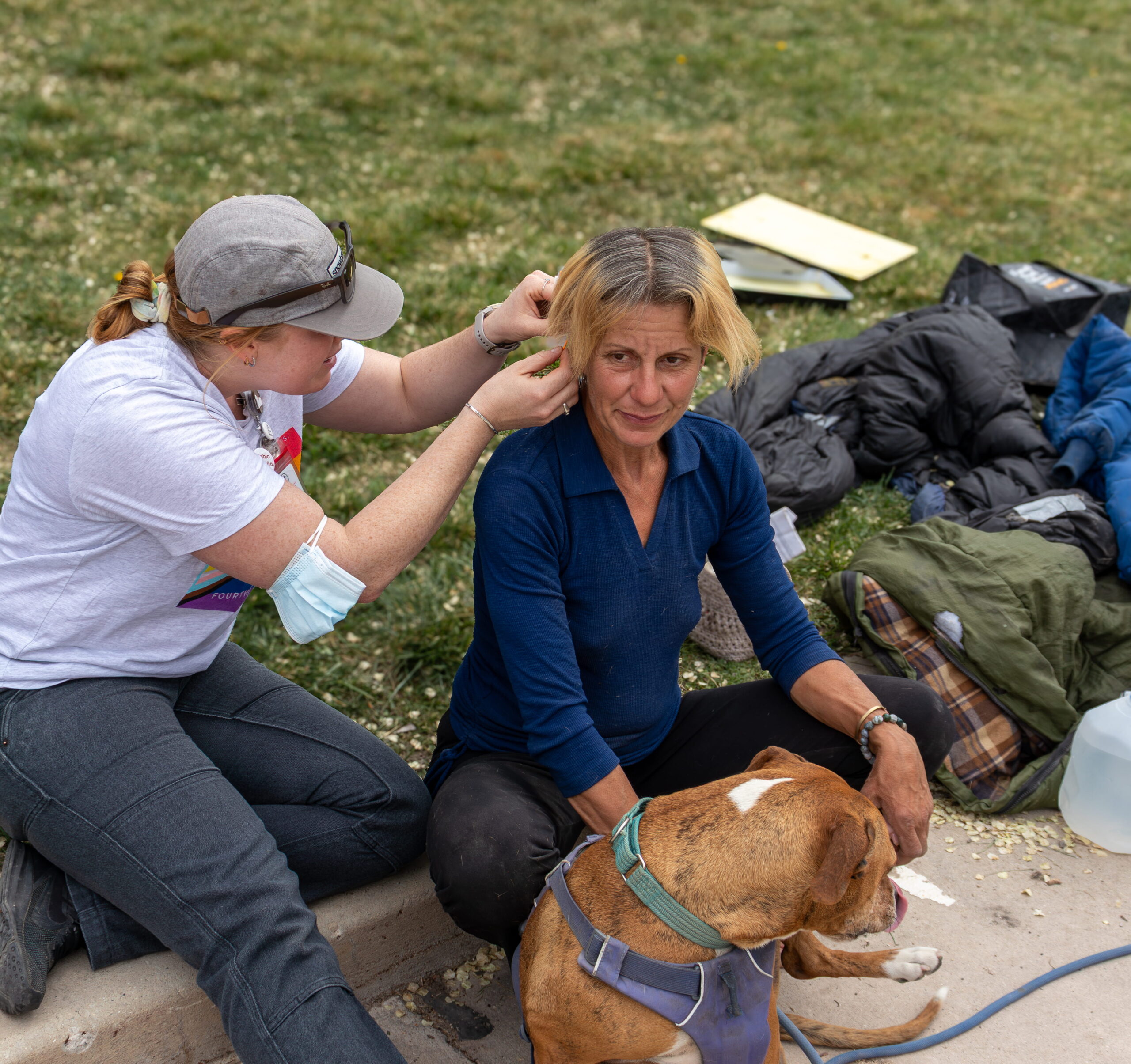
Creative and free-spirited, she spends her days with her dog, Ellie, crafting jewelry to sell at the Liberty Park Drum Circle. She lives with PTSD and suicidal ideation, along with a reluctance to seek care shaped by past medical trauma. As the sole caretaker of her son, who became disabled after open-heart surgery, accessing care has never been simple.
After surviving domestic violence and losing connection with her family, Alabama found herself alone and eventually homeless. “I’ve always been a mom – that’s what my whole life revolved around,” she reflects.
For Alabama, the healthcare system has not felt safe. “Every doctor I’ve spoken to about my mental health issues has only ever written me a prescription and has never done an evaluation,” she shares. So, care comes to her.
Through our Medical Outreach Street Team, Alabama’s provider meets her where she is – creating space for trust and real support. For the first time, Alabama will receive a behavioral health assessment and begin getting the care she deserves.
“I want people to remember me in a good place, and I want to get my soul back,” she says.
On May 16 Fourth Street Clinic will walk with our community in NAMI Walks, standing for mental health awareness and the belief that no one should have to navigate these challenges alone. Stories like Atreyo’s and Alabama’s remind us that healing doesn’t look the same for everyone, but with the right support, it is always possible.
Written By: Hailey Shingleton